
Regulatory trails: Week 38, 2026
The regulatory trail highlights key developments across African aviation, including UGANDA’s first aircraft operations at Kabalega International Airport ahead of its commissioning, ZIMBABWE’s approval for nationwide commercial BVLOS drone deliveries, and UGANDA’s progress toward lifting aviation-related travel restrictions with the UNITED ARAB EMIRATES. It also covers SENEGAL’s push to modernise the AAMAC regulatory framework, DRC’s suspension of Tracep Congo Aviation’s AOC following a fatal crash, and EGYPT’s strengthened pilot, cabin-crew, maintenance and aviation-medical certification frameworks. Other developments include EgyptAir’s successful TSA security audit, revised Egyptian visa fees, an unconfirmed Somaliland proposal concerning Berbera Airport, and TANZANIA’s implementation of mandatory travel insurance for most foreign visitors.

Regulatory trails: Week 37, 2026
Africa’s aviation sector is advancing connectivity, trade, regulation and infrastructure across multiple markets. The African Union is developing priority air-cargo corridors to support AfCFTA and improve intra-African trade, while Egypt has aligned Alexandria International Airport under the new ALY code. Ghana is strengthening risk-based drone regulation, Madagascar Airlines is preparing to restore the Air Madagascar brand, and Mozambique is restructuring its airport network alongside a long-term aviation master plan. Meanwhile, concerns over airspace control in Namibia and regulatory reform in Niger highlight persistent infrastructure and governance challenges, while Jubba Airways’ international restart signals renewed connectivity for Somalia.
Regulatory trails: Week 36, 2026
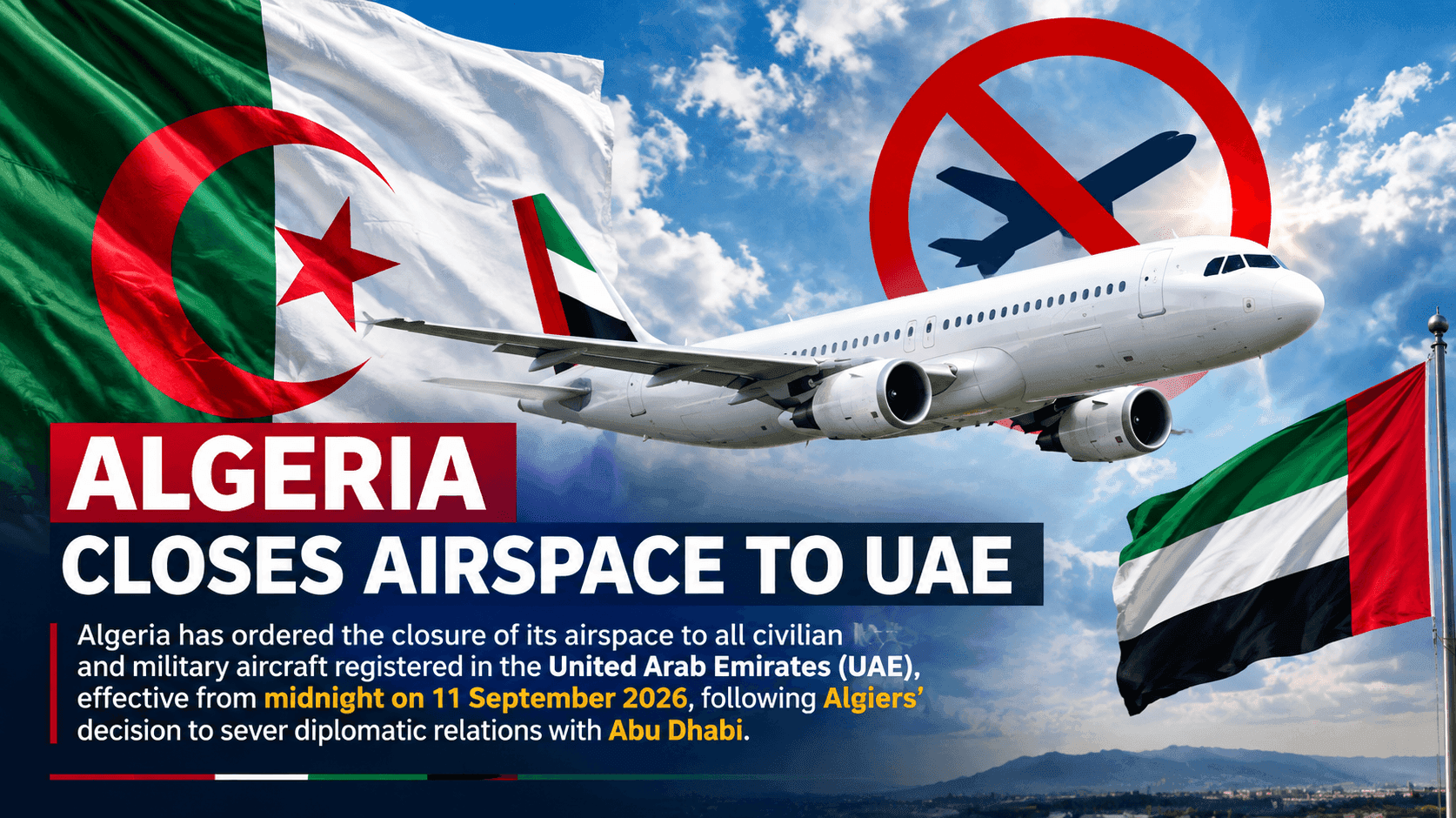
The Regulatory Trail reflects significant developments in aviation policy, safety oversight, airspace management and sector sustainability across AFRICA. ALGERIA has restricted UAE-registered aircraft amid diplomatic tensions, while MAURITIUS is establishing a National Aviation Council to review air-access policy and foreign-carrier participation. TOGO is strengthening safety oversight through an ICAO technical mission, and NIGERIA is reforming flight-procedure design while facing growing concerns over aviation taxes and charges. Meanwhile, GUINEA has designated Guinée Atlantique Airlines as its new national carrier, supporting its wider Vision Simandou 2040 development strategy and ambitions to strengthen domestic and regional connectivity.

Regulatory trails: Week 35, 2026
African aviation is seeing significant regulatory and policy developments, including Mozambique’s new licensing framework for private air operators, Ghana’s tax exemptions on aircraft spare parts, and regulatory preparations for the launch of Guinea’s new national carrier. Namibia is also assessing Ethiopian Airlines’ potential role in Namibia Air, while Egypt and Syria advance technical inspections toward restoring direct air services. In South Africa, SACAA is investigating Airlink’s controversial low-level flypast over DHL Stadium, highlighting continued regulatory scrutiny of operational safety and compliance.
Regulatory trails: Week 34, 2026
The trail highlights major aviation policy, infrastructure, regulatory and governance developments across Kenya, South Africa, Nigeria, Ghana and Senegal. Key developments include Kenya’s passenger-charge reforms, Bhisho’s proposed cargo-hub expansion, Bolt’s return to Nigerian airports, Ghana’s spare-parts tax exemption and aviation-charge reforms, Senegal’s regulatory review, and KAA’s transition into a public limited company.

Regulatory trails: Week 33, 2026
Week 33’s Regulations Trail highlights regulatory cooperation and institutional coordination across AFRICA. Key developments include KENYA’s coordination with aviation stakeholders on revised flight procedures, SENEGAL’s regulatory reforms, regional harmonisation of flight-inspection standards in WEST AFRICA, and MOZAMBIQUE’s airline transformation through fleet modernisation, branding and operational restructuring.

Regulatory trails: Week 32, 2026
This edition highlights major regulatory, financial and operational developments across Africa’s aviation sector, with Kenya approving more than 20 air service licences covering passenger, cargo, charter, training and specialised aerial operations. Nigeria is exploring an innovative “Seat-for-Debt” mechanism to help airlines settle aviation-agency arrears while protecting operational liquidity, while South Sudan advances a comprehensive transport policy aimed at strengthening aviation regulation, safety and infrastructure. Internationally, Air Transat has secured approval for codeshare services to Thailand and Egypt, expanding connectivity without additional aircraft, while EgyptAir Ground Services renewed its IATA ISAGO accreditation without findings. Meanwhile, the Nigeria Civil Aviation Authority has launched a dedicated radio platform to strengthen passenger-rights education, regulatory communication and consumer protection.

Regulatory trails: Week 31, 2026
This trail highlights major aviation developments across West, Southern and East Africa, including Burkina Faso’s ratification of the Montréal Protocol, Morocco’s new aeronautics academy, Namibia Air’s progress toward launch, SAA’s essential-services application, Sam Airways’ Falcon 8X expansion, Benin Airport’s runway reopening, Uganda’s dispute over UAE travel restrictions, and regulatory and funding challenges in Nigeria.

Regulatory trails: Week 30, 2026
African aviation policy advanced through major regulatory and operational initiatives, including AFRAA's progress on Free Route Airspace, industry calls for ICAO-compliant passenger data systems, EGYPT's border modernization and aviation tax reforms, and Qatar Airways' regulatory approval to re-establish operations in LIBYA, strengthening regional connectivity, efficiency, and security.